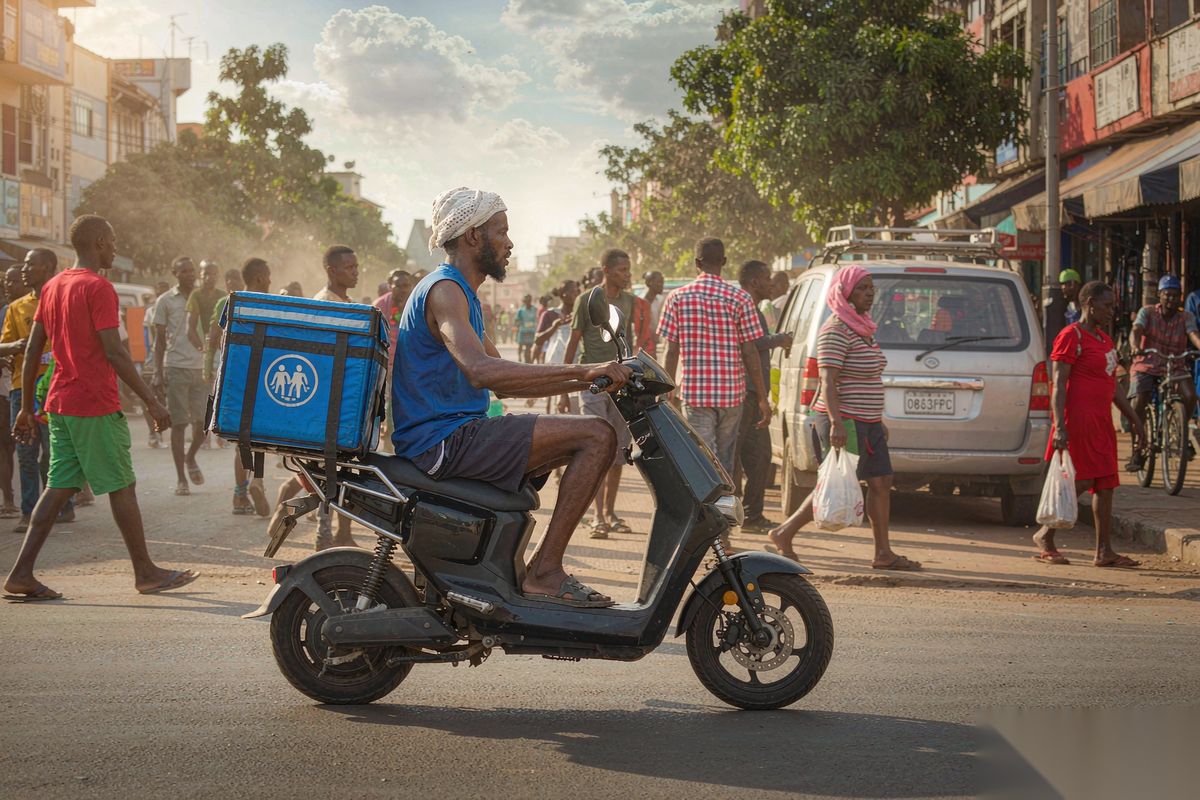
In many African cities, last-mile delivery depends on motorcycles. With fuel costs fluctuating, urban emissions rules tightening and parcel volumes growing, electric motorcycles are moving from optional to worth-modelling-seriously. For delivery platforms and fleet operators, the question is not whether to electrify but how to take the first step with manageable risk.
Why two-wheelers
In urban delivery, two-wheelers win on traffic efficiency and cost per kilometre. Electrification amplifies both:
- More predictable energy cost: electricity and fuel follow different price dynamics, making long-run operating cost easier to forecast
- Simpler maintenance: no engine oil, filters or spark plugs; day-to-day servicing concentrates on brakes, tyres and batteries
- Built for high-frequency short trips: urban delivery is mostly repeated routes within a fixed radius, which matches the rhythm of electric replenishment
Three real constraints in African markets
Transplanting solutions from mature markets rarely works, mainly because of environmental differences:
- Challenging roads: unpaved surfaces, gradients and potholes demand stronger frames, suspension and tyres
- High payload requirements: a single vehicle often carries box, cargo and rider combined, requiring heavy-duty frames and high-torque motors
- Replenishment still being built out: accessibility of charging or swapping directly determines real-world availability
Four questions to assess before starting
- Route and mileage profile: average daily distance, longest single trip and stop density determine battery configuration and replenishment method
- Replenishment approach: centralized charging, on-vehicle charging or a swap network, depending on fleet size and site conditions
- After-sales and spare parts: local repair capability and stable supply of wear parts affect uptime more than spec sheets do
- Asset and funding structure: purchase, lease or lease-to-own significantly changes cash flow and expansion pace
Reducing the cost of trial and error
A steadier approach is to validate at small scale first: pick one representative delivery route, run a limited number of vehicles through a full operating cycle, collect real energy, maintenance and uptime data, then decide how to scale.
For overseas delivery and shared-mobility operators, fasfab EV offers a combined package covering vehicles, core powertrain components, platform and operational support, adaptable to local road and payload requirements — helping partners validate electrification and scale up at manageable risk.